Posts Tagged Apologia Biology
Apologia Biology: Module 12 – Phylum Arthropoda
Posted by jlsgrant in Apologia Biology, Life Lessons/Inspiration on March 6, 2011
Phylum Arthropoda is home to some of my least favorite creatures….spiders and centipedes. Oh they’re OK outside, but please stay out of my territory! That’s all I’m saying! However, in all fairness to this Phylum, it is also home to Shrimp Cocktail, Coconut Shrimp, King Crab Legs, and Crayfish Etouffe’.
Class Crustacea
This week’s class focused mainly on Experiment 12.1 – Crayfish Dissection. Applie took some great pictures of her Crayfish Dissections, so be sure to check out her blog.
Class Arachnida –
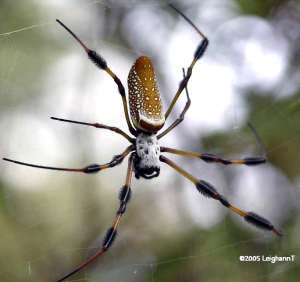 While, as admitted, this is not my favorite creature, they are an amazing group! When we first moved into our house, we had a huge banana spider take refuge just outside our dining room window. It was amazing to watch her spin her web and catch insects. She was quite beautiful in her own way. At night, in the light of a nearby street light, the web made cool, yet creepy shadow on the dining room wall! One day the “bug guy” came to spray and I ran outside to tell him not to kill the spider! He said that was a first! 🙂 After several weeks, Charlotte got a little greedy, trapped and ate a dragonfly, and promptly fell to the ground dead! (Photo courtesy of Photobucket.com)
That ends my tale, but check out these interesting videos….
NOVA Series Examines Strength of Spider Silk
Look at this…a Trap Door Spider…
Ever wonder, How do spiders make their web?
Here is an interesting art project: Spider Web Art Project
Class Insecta
Of the many things to learn about Class Insecta, and perhaps the most beautiful is the metamorphosis from egg to larva, to pupa, to adult. Surprisingly, a majority insects go through this type of process. AMAZING! We have had the privilege of watching the metamorphosis of the Monarch, and other butterflies, over and over in our own backyard.

I cannot observe this process without being reminded of our own metamorphosis. Romans 12:2 says, “and do not be conformed to this world, but be transformed by the renewing of your mind, so that you may prove what the will of God is, that which is good and acceptable and perfect.” (NAS) The only other time this word is used in the Bible is in the transfiguration of Christ, mentioned in all four gospels! Brings a little depth to our own metamorphosis, doesn’t it? Have we undergone a complete metamorphosis, changed to an entirely new creature? Or are we stuck in the larval stage?
The remaining time in class was spent observing some very interesting insect collections; one contained many local species and the other was a collection of insects from Thailand. Because of time limitations, for Experiment 12.2 – Insect Classification, we used the specimen in the textbook for our project.
A couple of ideas to throw in the pot: 1) Have each student do a virtual insect collection of 10 – 20 local species, print pictures and make scrapbook-like pages for their notebooks, journal their identifications and 2) Have each student bring one or two live specimen in a jar for the class to identify and observe.
Study Link: Flashcards & Games at Quizlet.com
Share this post

Apologia Biology: Module 11, “Invertebrates”
Posted by jlsgrant in Apologia Biology on February 5, 2011
Invertebrates….like sponges, and mollusks, and worms….oh my! And only two weeks to cover it all! Yikes! I wish we could stop and camp for awhile on my favorite invertebrate sea creatures, but I suppose the show must go on. Who knows, maybe Exploring Creation with Marine Science is somewhere in our future!
Symmetry – You’ve got to see this awesome post on Symmetry over at Applie’s Place! We are Not Created Equal! What a fun project! Thank you Applie!
Let’s start with Phylum Porifera, The Sponges. Check out this Filtering Barrel & Chimney Sponges video on You Tube to get a glimpse on how these creatures work as a filter.
Experiment 11.1 – Observation of a Sponge
We started by examining a sponge that I had purchased awhile back up in Tarpon Springs at the Sponge Docks. Once wet, it is actually very soft! I’m not sure what type of sponge this is, but please feel free to leave a comment if you do.
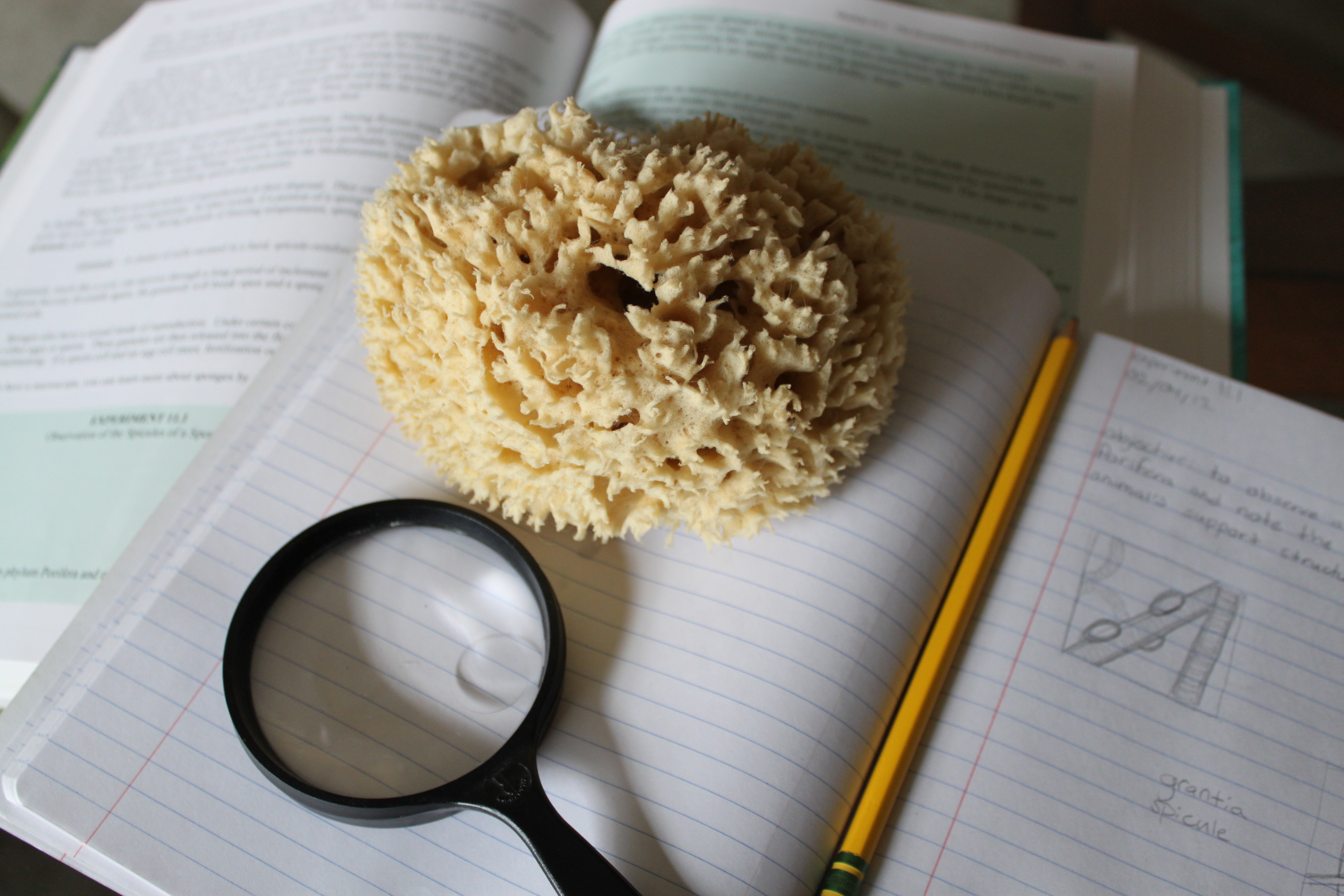
Before class, I took a small slice and prepared a microscope slide to observe under the microscope. One of the ways sponges are identified, is whether they have spicules and what type of spicules they possess. Because this type of sponge is very soft, we assumed that this sponge is a type that has spongin, not spicules. (See page 333 of your textbook.)

This image was taken at 40X.
Next we took a look at some spicules from a prepared slide. These are spicules from Grantia (Scypha) sponge at 40X:
We were able to locate needle and multipronged “jack” shapes in this image.

Next up is Phylum Cnidaria, with Hydra, Sea Anemone, Coral Polyp, and Jellyfish. Before we move ahead to the microscopic images, take a look at this video. God’s creation is so amazing! If you want to look at jellyfish in more detail look for the beautiful and harmless bioluminescent Comb Jellyfish (my favorite around Tampa Bay) or the deadly Irudkandji from the waters off the coast of Australia.
Watch these amazing light shows from the Bloodbelly Comb Jelly, courtesy of the Monterey Bay Aquarium.
Experiment 11.2 – Observation of a Hydra
The Hydra is a “typical” member of Phylum Cnidaria. We used the images below and Figure 11.5 (Page 338) to draw and label the as many structures as we could identify. (For a larger view, click the picture.)
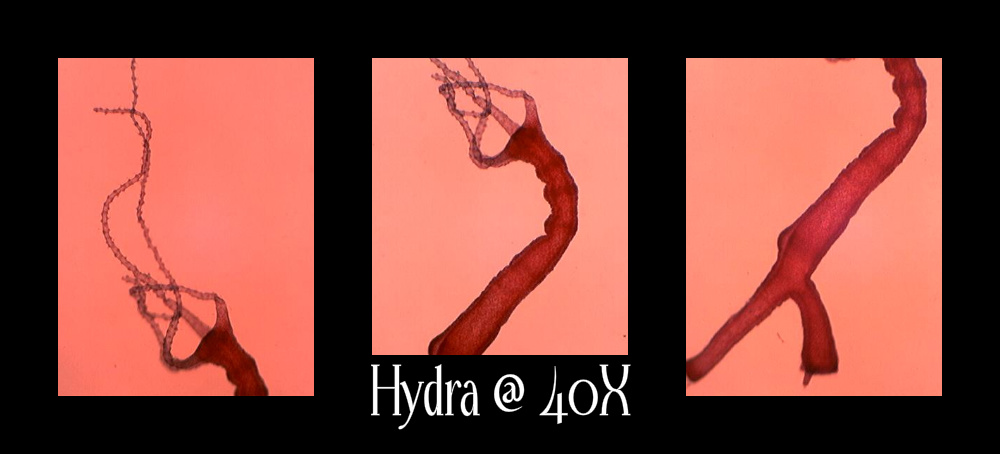
Using the next images, taken at 100X, you should be able to locate the nematocysts, stingers, mesoglea, trigger and even the cells that secrete digestive enzymes:

Experiment 11.3 – Earthworm Dissection (Phylum Annelida)
Some people approach dissections with a bit of fear and trepidation. Not us though! We are real troopers! And it truly was very interesting to observe the worms last meal….dirt! I supposed we should have given them a proper burial and thanked them for their contribution to science, but we ran out of time and they were disrespectfully thrown into the trash! ;o
WARNING: Some photos may cause nausea, but hopefully not vomiting….proceed with caution! Just kidding; it’s only a worm!
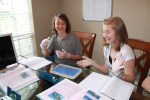
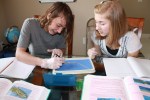
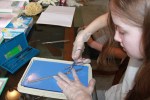
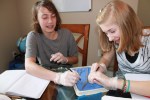

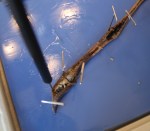


Before we move on, I thought I’d share this short video by the Mystic Aquarium Institute for Exploration: Tube Worms living in the extreme environment of the world’s deepest oceans.
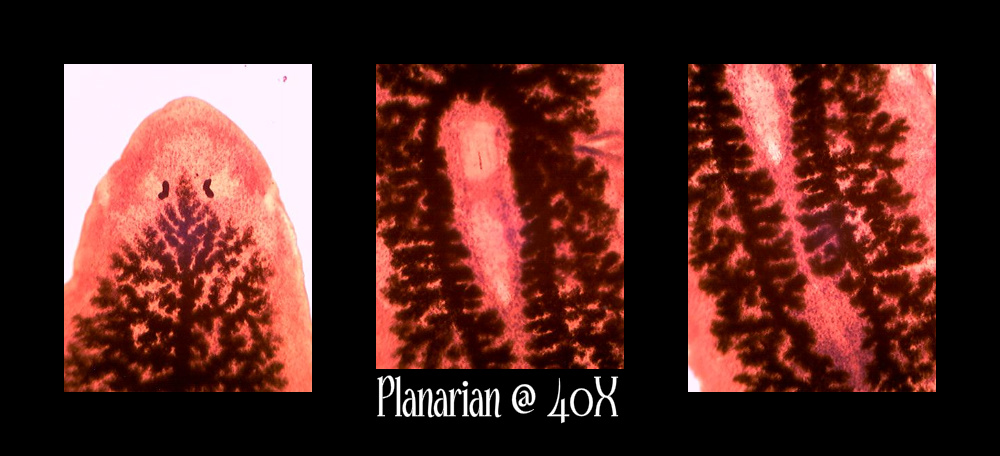
Experiment 11.4 – Observation of a Planarian
A Planarian is an example of an organism from phylum Platyhelmintes. We used the images below to sketch an identify the structures. Use the diagram in Figure 11.9, located on page 350 in your textbook, to help you identify the eyespots, branched intestines, pharynx, and mouth.
Phylum Nematoda: Roundworms
Members of this Phylum may be “out of sight”, but probably will not stay “out of mind” for long! Here’s a link to some short, but interesting video’s from the Monster’s Inside Me on Animal Planet.
This would be a wonderful time to take a trip to the beach, don’t you think? A day at the beach marine species field study is in order, right? And while we’re there, we should have a picnic, collect shells, and toss a frisby! Wouldn’t you agree?
Study Link: Flashcards & Games at Quizlet.com
Disclaimer: No compensation of any kind has been received in exchange for promoting the websites or TV shows mentioned in this blog post. Purely voluntary….yes, we have no trichinosis!
Share this post


One Word


 Mindful Ramblings